How to Use Reference Without Copying
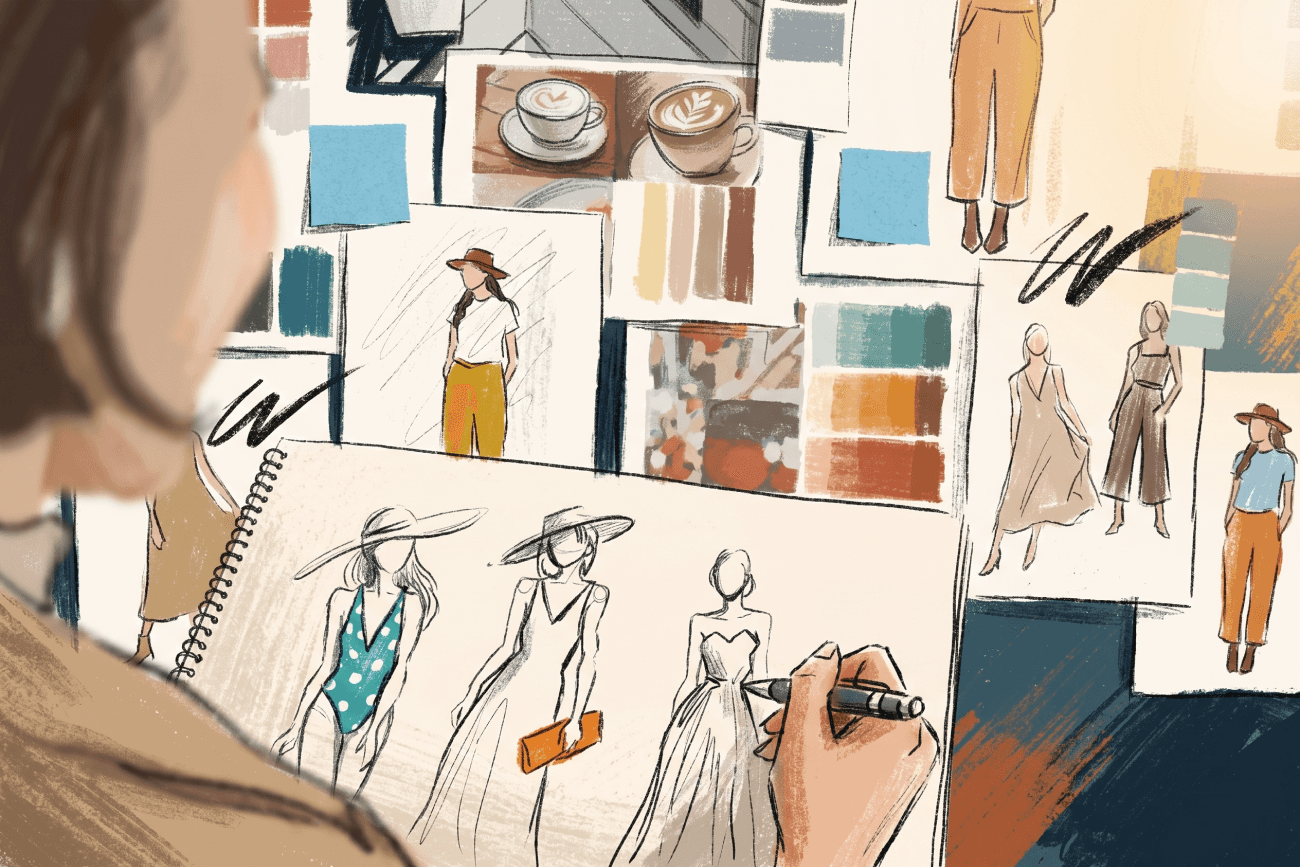
You spot a great photo. The lighting is perfect, and the pose matches what you want to draw. You bring it into your canvas, start working, and after four hours, you realize your piece looks almost exactly like the photo, just redrawn.
This is a common worry when using references. How do you avoid just copying someone else’s image with your own style? The good news is, there’s a skill to this. It’s about knowing what you’re taking from a reference and what you’re creating yourself.
Reference is information
This requires a new mindset. You’re not copying a photo; you’re pulling information from it.
A photo of someone in a certain pose holds lots of details. How the weight is balanced, where the shadows fall, how fabric folds, the angle of a lifted shoulder, the figure’s proportions, or the skin color in that light. Any of these details can help you.
Focus on the information, not the whole image. If you try to copy a reference exactly, you’re just copying. Take what you need and leave the rest.
Pull more references than you need
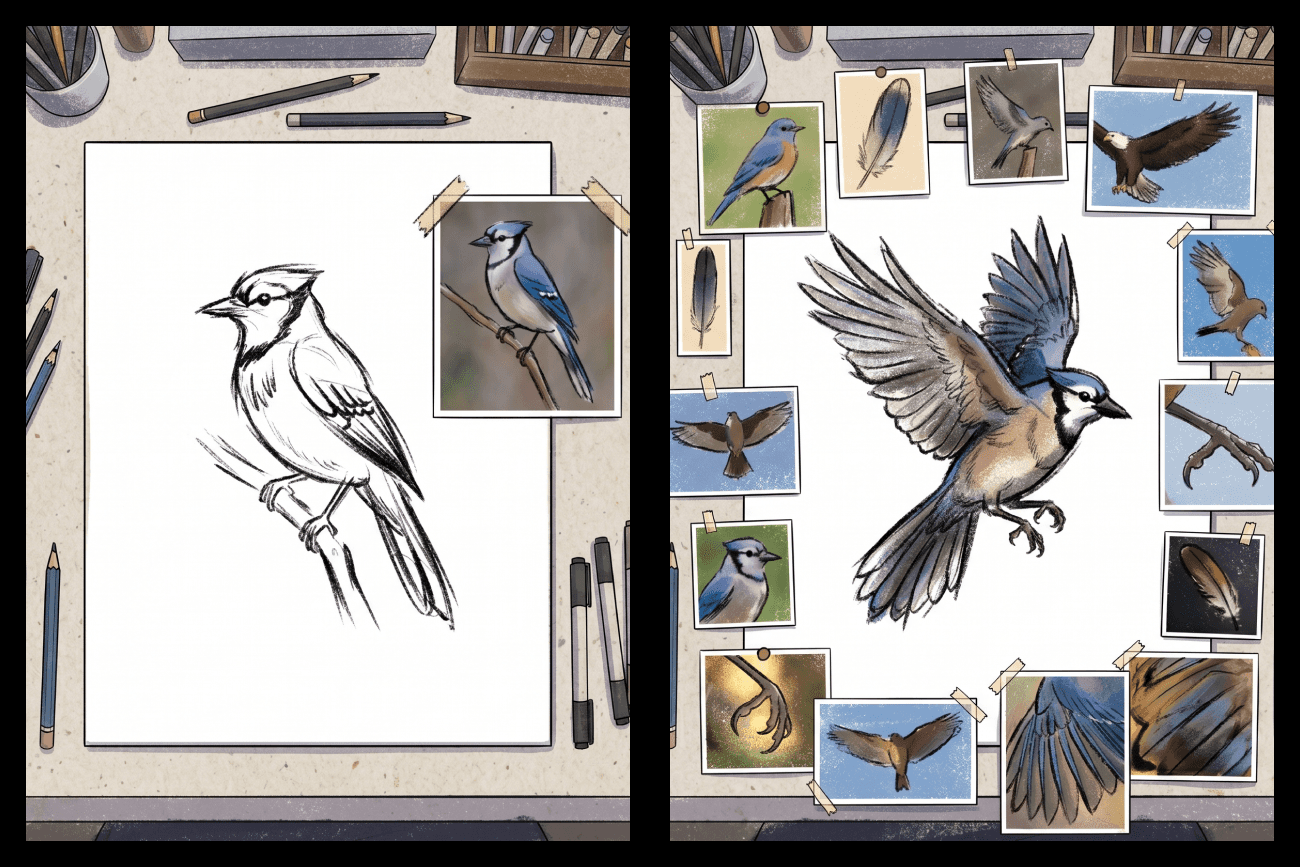
The best way to avoid copying by accident is to never use just one reference at a time.
If you’re drawing a figure, gather several photos of people in similar poses, not just one. You’ll end up taking the shoulder from one, the hand from another, and the lighting from a third. When you combine four or five references, your drawing becomes unique. What’s on your canvas is truly yours.
This approach works for everything. Drawing a sword? Don’t just find one photo. Find five or ten. Take the hilt from one, the blade shape from another, and the leather wrap from a third. Drawing a forest? Collect several forest scenes, some lighting studies, and a few close-up texture shots.
That’s why many artists keep large reference libraries. The idea is to mix things up, so no single photo shapes your work too much.
Understand before you draw
When you open a reference, it’s tempting to start drawing right away. Try to pause for a moment instead.
Take a minute to really look at it first. Notice where the light comes from and the structure beneath the surface. Ask yourself why you chose this reference and what you want to get from it.
If you can answer those questions, you can draw what the photo is showing without drawing the photo itself. That's the goal. You want to understand the scene well enough to extract its information and apply it to your scenario.
That’s the difference between copying and learning from a photo. Copying gives you just one drawing. Learning adds knowledge you’ll use in every future piece.
Change something on purpose
Here's a simple exercise that forces you to reference rather than copy. Every time you use a reference, change at least one significant thing about it in your drawing.
You could move the light source, change the angle, flip the pose, put the figure somewhere new, redesign the clothing, or make the character older or younger.
This rule does two things. It makes you really understand what you’re seeing, since you can’t copy and change something at the same time. It also ensures your finished piece isn’t just a copy, so you avoid the problem from the start.
This is how professionals work too. They find photos that are close to what they need, then adjust them to fit their piece.
Hide the reference test
Here’s a quick way to check if you’re referencing or copying: close your reference for ten minutes.
If you can keep drawing and your piece keeps progressing, you’re using the reference well. You’ve taken what you need and are working from understanding. If you get stuck without the reference, you’re copying, not drawing from what you’ve learned.
This exercise isn’t about avoiding references. It’s about not getting stuck on just one image.
Photos versus other art
Using photo references is almost always fine. Photos of real things, ones you’ve taken, stock images, or friends posing for you; all are good. No one seriously thinks that’s cheating or copying. That’s how representational art is made.
Using another artist’s finished work as a reference can be tricky. It’s fine to study or copy an artist you admire, as long as you don’t present it as your own. For original work, don’t use just one artist’s work as your only reference, or you might end up copying their style too much. That’s how art becomes derivative.
Here’s a simple rule: for learning, copy whatever you want in private. For your public work, use photos, draw from life, mix different sources, and add your own ideas. If you use a lot from one artist, give them credit. It’s just polite.

Keep it visible while you work
One last tip, since it ties everything together.
It’s much harder to use references well if you can’t see them clearly. If you have forty tabs open or your reference is a tiny image on your phone, you’ll probably end up copying the one you can actually see.
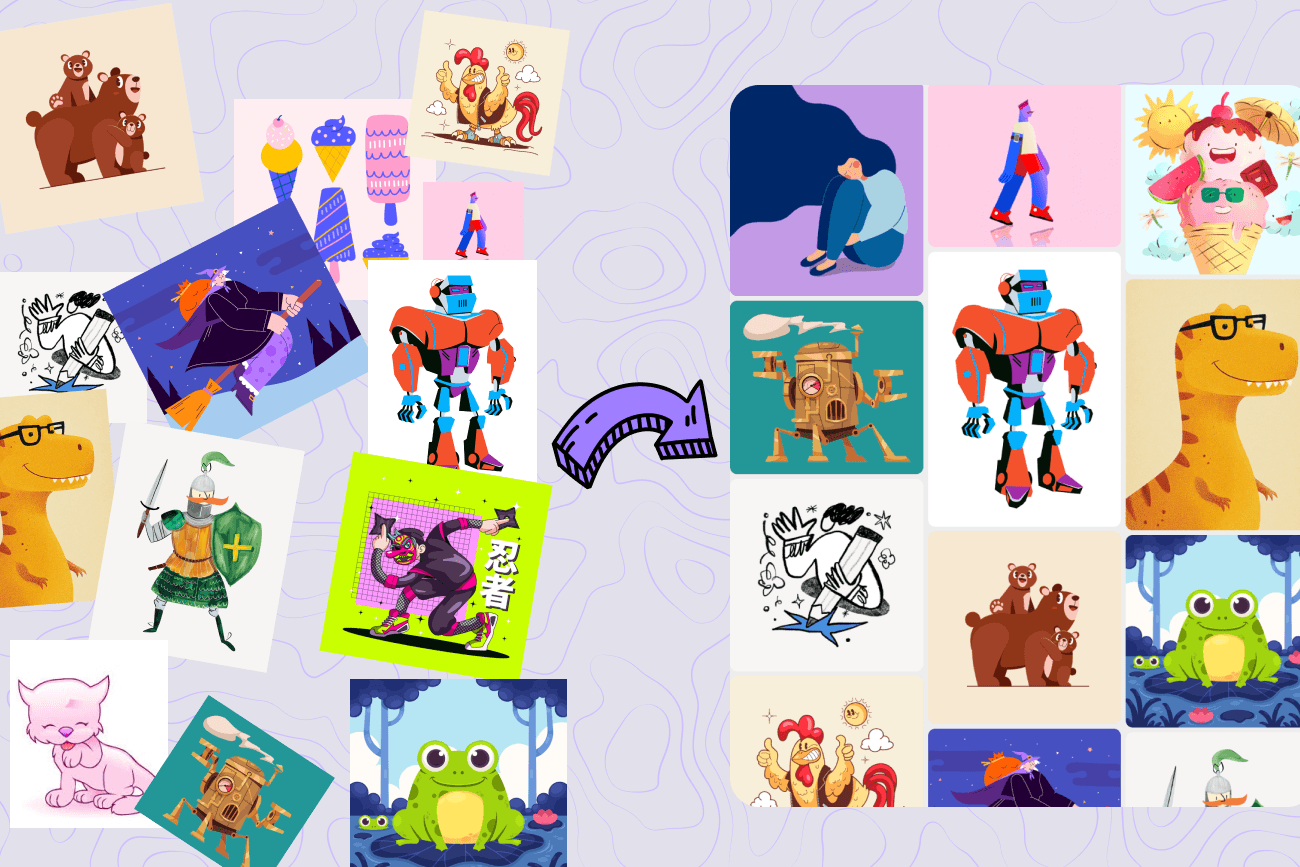
Set things up so you can see several references at once, and make sure they’re big enough to use while you draw. Use printed photos, a second monitor, or try Refbox. I made it to help you stay organized and easily view multiple images whenever you need them.
To sum up, regular practice and smart use of references will help you grow as an artist. Over time, references will become a helpful tool instead of something to worry about.